1-877-929-7245
Tour Search


Normandy Landing Beaches

Normandy Landing Beaches

The Normandy Landings were a pivotal part of Operation Overlord, the allied invasion of Europe from the UK which took place on 6th June 1944.

The most famous part of Operation Overlord was codenamed Operation Neptune and involved a huge flotilla of small ships and troops crossing the Channel to land on the French coastline in Normandy. The main beaches used for the operation were Sword, Juno, Gold, Omaha, Pointe du Hoc and Utah. These names were code for stretches of the coastline - before the landings the beaches themselves did not have recognised names, or were simply named after the nearest town. Today the beaches are generally referred to by their WWII code names.

3 results matching: Escorted Rail Tours to Normandy Landing Beaches

Filters
Any
Reset
Any
Reset
Any
Reset
Any
Reset
Any
Reset
Any
Any
Reset
Loire Valley Chateaux Loire Valley Chateaux Loire Valley Chateaux Loire Valley Chateaux Loire Valley Chateaux
4.0 stars(35 reviews)
Escorted
2026AprJunSep
Escorted

Explore the highlights of Paris and northwest France, with guided tours of its historic cities and landmarks, palaces and châteaux. On this diverse tour, visit the expansive Palace of Versailles and Monet's famed garden, then continue to Normandy's beaches, taking in the poignant D-Day landing sites. Explore majestic Mont St Michel and the...

View map

10 days from
$3,095 pp
per person
View Details
River CruiseRiver Cruise
ParisParisParisParisParis
New Season Savings
Escorted
2026AprJunJulSep
Escorted

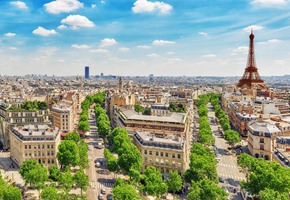
 From Paris, under the Eiffel Tower, to landscapes and historical villages so picturesque, they inspired the world's greatest artists, dive into the essence of France. On this Seine cruise, each port of call reveals new artistry. Travel from Paris to Auvers-sur-Oise, a favorite of Van Gogh, before discovering Rouen's famous cathedral and the...

View map

New Season Savings
8 days from
$2,195 pp $1,995 pp
per person
View Details
River CruiseRiver Cruise
Paris Paris Paris Paris Paris
New Season Savings
Escorted
2026AprJunJulSep
2027AprJunSep
Escorted

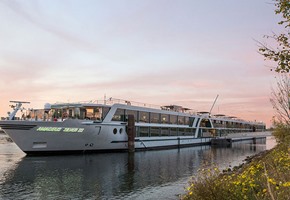
Eight days of unparalleled luxury aboard the MS Amadeus Diamond begins and ends in the romantic City of Light, Paris. Cruise along the River Seine, where history, art and natural beauty converge to create an inspiring experience. While sailing, we discover the peaceful landscapes that inspired some of the world's greatest artists. Wander the...

View map

New Season Savings
8 days from
$2,995 pp $2,795 pp
per person
View Details
Our customers love our Normandy Landing Beaches tours
Paris, Versailles, Normandy & the Loire Valley
11 Oct 2025
Rita Moore
4 stars
“Lots of beautiful places but rushed at every stop. Needed more time at Normandy Beach.
Collected by Trustpilot

More about Normandy Landing Beaches

On 6th June 1944, the Allied Forces made significant progress in 'Operation Neptune', the procedure to liberate Vichy France from German occupation. Now known as D-Day, the operation was successful, and marked a major turning point in the Second World War. There are a number of sites involved in the landings that can still be seen today.

Longues-sur-Mer

A large battery was built here by the Germans in 1943-4, as part of their Atlantic Wall fortifications. On the evening of 5th June 1944, the battery was heavily bombed by Allied Forces. This carried on throughout the following day, making it the scene of one of the longest conflicts of the operation. The 184-strong crew in the battery finally surrendered in the evening of the 6th June. The remains of the battery are still intact.

Arromanches

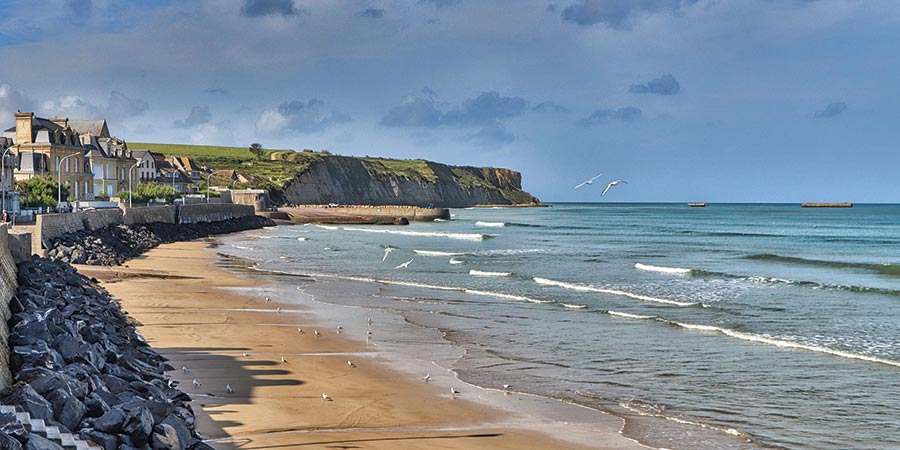
It was here that one of the artificial harbours assembled in England was sited. After being towed across the Channel, the harbour was able to provide the port facilities necessary for the Allied Forces to offload thousands of men and vehicles without coming under immediate attack. The evocative remains of this significant structure can still be seen from the shore today.

Gold, Juno and Sword beaches

Even today, the stretches of coastline where the Allied forces landed and launched their offensive are still referred to by their code names. The shore was divided into sections, and troops were assigned to different parts - with the aim that each section would be secured, before the troops from each section linked up and advanced further forward. For the most part these were successful; the only one that saw a true conflict with the Germans was Sword beach, and this was eventually overcome.

Ranville Cemetery

Ranville was the first village to be liberated in the D-Day landings, after the bridge over the Caen Canal was captured. Due to its significance in the operation, Ranville was chosen as a fitting final resting place for some of the heroic men who gave their lives. There are more than 2,200 Allied graves here, and about 330 graves of German soldiers.

Pegasus Bridge

Originally known as Bénouville bridge after its neighbouring village, this was one of the most significant early targets for the Allies. Its capture resulted in the liberation of the first French house in the early morning of 6th June. In honour of the operation, the bridge was renamed Pegasus Bridge by the Allied forces - after the flying horse on the British Airborne forces' emblem.

The bridge was replaced by a newer model in 1994, but the original was removed and preserved in the nearby museum, so that its story would be preserved for future generations.

Latest Expert Advice & Inspiration